 Social media is about social science not technology. As such, its value is not realized in the Likenomics of relationship status nor in the scores individuals earn by engaging in social networks. The value of social media comes down to people, relationships, and the meaningful actions between them. As such, its value is measured through the exchange of social currencies that contribute to one’s capital within each network. Through conversations, what we share, and the content we create, consume and curate, we individually invest in the commerce of information and the relationships that naturally unfold. It is in how these relationships take shape that is both in and out of your control. This is why, in the age of social networking, relevant engagement counts for everything.
The Multi-Channel Implications of Mobile and Mobile Strategies for Retail
 Recently I read some thought-provoking points about the approaches that many retailers are taking toward engaging people on mobile devices. It is clear that the retail business is among the first to experience rapid and permanent change thanks in large part to the ways in which consumers from all walks of life are willingly loading shopping apps onto their phones. People want to use their phones to research goods and services, complete a purchase and engage with brands when and how it’s convenient to them. And that leads to mobile.
Seven Strategies for Women Business Leaders
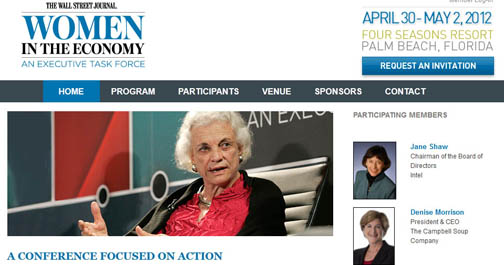 Helping women ramp up their businesses, not only to add jobs, but to increase profitability and financial independence, is one challenge I’m looking forward to discussing at The Wall Street Journal Women in the Economy Task Force, on April 30—May 2.
Improving the competitiveness of the American workforce is the overarching goal: “To that end, the Task Force will address ways to drive change beyond the organization focusing on leadership and innovation in sessions that identify opportunities for action in influential areas from education and entrepreneurship to science/technology/math and politics.”
Beware of the Shiny New Toy Syndrome: People are Social—Not Platforms
 Late last year I posted a discussion about whether or not Pinterest will replace Facebook as a social platform. The post was meant to spark conversation. It’s interesting… whenever a new platform rises (like Pinterest or Google Plus), there is always chatter about whether it will bring down the big giants.
Lots of people try out the new kid on the block, and some become die-hard converts saying: “This is GREAT! I’ll never go back to _______ (Insert Facebook, Twitter, etc.)!” They may have been big complainers about the other platforms, just waiting for an excuse to leap away to something they perceived as a “better,” or they simply may just be intrigued by something new.
Extending the narrative

Did you wake up fresh today, a new start, a blank slate with resources and opportunities… or is today yet another day of living out the narrative you’ve been engaged in for years?
For all of us, it’s the latter. We maintain our worldview, our biases, our grudges and our affections. We nurse our grudges and see the very same person (and situation) in the mirror today that we did yesterday. We may have a tiny break, a bit of freshness, but no, there’s no complete fresh start available to us.
Marketers have been using this persistence to their advantage forever. They sell us a car or a trip or a service that fits the story we tell ourselves. I don’t buy it because it’s the right thing for everyone, I buy it because it’s right for me, the us I invented, the I that’s part of the story I’ve been telling myself for a long time.
The socialite walks into the ski shop and buys a $3000 ski jacket she’ll wear once. Why? Not because she’ll stay warmer in it more than a different jacket, but because that’s what someone like her does. It’s part of her story. In fact, it’s easier for her to buy the jacket than it is to change her story.
If you went to bed as a loyal company man or an impatient entrepreneur or as the put-upon retiree or the lady who lunches, chances are you woke up that way as well. Which is certainly safe and easy and consistent and non-confusing. But is it helping?
We dismiss the mid-life crisis as an aberration to be avoided or ridiculed, as a dangerous blip in a consistent narrative. But what if we had them all the time? What if we took the resources and trust and momentum that helps us but decided to let the other stuff go?
It’s painful to even consider giving up the narrative we use to navigate our life. We vividly remember the last time we made an investment that didn’t match our self-story, or the last time we went to the ‘wrong’ restaurant or acted the ‘wrong’ way in a sales call. No, that’s too risky, especially now, in this economy.
So we play it safe and go back to our story.
The truth though, is that doing what you’ve been doing is going to get you what you’ve been getting. If the narrative is getting in the way, if the archetypes you’ve been modeling and the worldview you’ve been nursing no longer match the culture, the economy or your goals, something’s got to give.
When decisions roll around–from what to have for breakfast, to whether or not to make that investment to what TV show (or none) to watch on TV tonight, the question to ask is: Is this a reflex that’s part of my long-told story, or is this actually a good decision? When patterns in engagements with the people around you become well-worn and ineffective, are they persistent because they have to be, or because the story demands it?
Seth Godin
Measuring Social Engagement… my two cents
 I believe many are looking at this in too narrow a fashion. Everyone is trying to assign a dollar value to a Facebook fan or Twitter follower instead of addressing the fact that engagement and interaction that takes place in these mediums and are incredibly important to a brand. They build relationships, create an emotional connection and therefore lead to Return on Relationship™… simply put the value that is accrued by a person or brand due to nurturing a relationship. ROI is simple $’s and cents. ROR is the value (both perceived and real) that will accrue over time through connection, loyalty, recommendations and sharing.
The mistakes I see being made is trying to measure Social engagement with the same tools we measure every other digital touch point. In my view email, search, even banner ads, have spoiled marketers into thinking everything can be and must be measured with the same metrics used to gauge success in other mediums. Initially as you are building your Social Media audiences, and testing, I have three stages with which I measure… #1 is Audience growth, #2 is Reactivity… getting them to take an action, and #3 Stickiness… keeping them coming back, engaged and interacting.
In addition setting expectations is important for the future are critical. Setting goals for number of follows/fans and how you interact and engage with them and them with you, can be very useful. Growth of your audience is very important as clearly outlined in the study by research firm Chadwick Martin Bailey… Consumers Engaged Via Social Media Are More Likely To Buy, Recommend, and their follow-up report… 10 Quick Facts You Should Know About Consumer Behavior on Twitter.
Banking With Apple Could Pose Serious Challenge to High Street According to a New Research Report
 From PRnewswire: Leading strategic marketing and research consultancy KAE, in conjunction with Toluna, a global pioneer in online polls, surveys and opinions, this week reveal the startling findings of a new research study into the opinions of consumers towards the potential of technology giant, Apple, breaking into the banking sector.
The survey, using Toluna’s global research panel community of 4 million consumers worldwide, collected data from over 5,000 respondents, across the US and UK, and revealed that one in ten people (10%) would consider banking with Apple. Of those who are already Apple customers, 43% would switch to Apple for their day to day banking needs.
Why Women Are The Most Powerful Brand Ambassadors In The World
 Last December I wrote of the need for more brand ambassadors. The need, as I surmised it, was based on a finding from a study conducted by Chief Marketing Officer (CMO) Council and Lithium, a social media tech firm.
There was one study finding in particular I based my belief on.
This one…
Time for Social Integration for TV and Publishing in 2012!
We may look back at 2011 as the year social integration into TV and publishing really accelerated in velocity. At least, we’ve seen that in the clients we work with.
Mass Relevance partnered with nearly 100 TV producers, broadcasters and publishers last year, in addition to our work with brands and retailers (stay tuned for more on this). In collaboration with our clients, we established best practices and processes to integrate real-time social content into live and scripted shows, next to articles and immersive social experiences.
Our Director of Content and Production, Derek Dodge (ex-CNN Social Producer) put together this ‘sizzle reel’ of some our TV and media work last year.
When it comes to social, we’re seeing more and more US and international TV producers are ‘getting it’.
The Importance of Brand in an Era of Digital Darwinism
 Part of an unpublished appendix for The End of Business as Usual…
Think of your favorite brand, and the first thing to come to mind is likely a logo, such as the Coca-Cola scripting, a tag-line, such as Nike’s “Just do it,” or a jingle – remember the Oscar Meyer Wiener song? These may be the aspects of a brand you remember, but they are no longer the most important aspects of branding today. Identity, persona, essence and promise, are the new kings and queens of the branding kingdom, thanks to technology and the deeper connections it opens up between brands and consumers.
Markets, consumer behavior and how businesses connect with customers are all directly impacted by technology. Looking at the rapid erosion of Blockbuster’s business model, it’s clear to see the impact that technology can have on consumer behavior. During Blockbuster’s initial bankruptcy filing, CNBC’s The Faber Report summarized it this way, “At the end of the day, this is one of those bankruptcies that’s not really about a financial situation as much as it’s about seminal changes in how people ultimately watch video.”