 For decades, companies were very good at pushing messages into markets and talking at people rather than with them. Now companies are embracing the idea of two-way interaction. Monitoring conversations is becoming standard procedure as small and enterprise businesses alike make substantial investments in tools such as Radian6, Sprial16 and Brandtology. And, not only are companies monitoring conversations, they’re adopting social media management systems (SMMS) such as Seesmic and CoTweet to operationalize conversations and platforms such as Objective Marketer, PeopleBrowsr and Buddy Media to automate engagement campaigns.
There’s a difference between monitoring and listening and there’s certainly a difference between conversations and engagement. How social media is employed today promotes monitoring as a reporting function and conversations as a symptom of reaction. In many ways, the state of social media is eerily reminiscent of traditional marketing. We’re fooled into a sense of collaboration and co-creation because people can respond. But programs are not measured by functionality, they are valued by the value customers take away from the experience. It begs the question, is social media in actuality anti-social?
New media philosophies, while rich with good intentions, are confined by the culture of the organization they’re designed to help. Corporate culture is pervasive and planted. It is not anything that will change suddenly because of the popularity of Twitter and Facebook no matter how strong your case. Culture shock takes place because a business is subjected to the harsh reality that customers no longer support the way business is conducted.
Read more
 I was going to talk to you today about goals. After all, we’re now in the second half of the year (can you believe it?!) and it’s a good time to see if you’re on track and consider any adjustments that need to be made.
 If you think that the place to reach Baby Boomers (born between 1946 – 1964) is anywhere that does not include technology, think again! Boomers in the U.S. are technology-savvy enough to comprise 1/3 of all TV viewers, online users, social media users and Twitter users.

 This post is for anyone who has had to ask (or been on the receiving end of the query) where did our social media marketing strategy go wrong?

 Looking to travel from the east to the west coast recently, I decided to take a look outside my normal coast-to-coast airlines United and American Airlines.
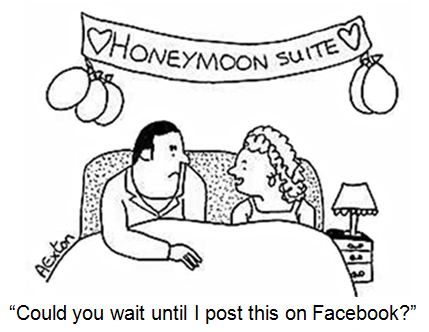 Do social media technologies isolate people and promote false relationships? Or are there important benefits associated with being connected to others in this way?