
Who owns social media? Is it marketing, customer service, public relations?
Looking at a recent study conducted by the Pivot Conference, the top four departments where social media is currently run are as follows:
1. Marketing
2. Public Relations
3. Sales
4. Customer Service
Perhaps, it’s the wrong question to ask however. It’s not unlike asking who owns email. But, here’s another question and as we think about it, let’s broaden our perspective as the answer may not appear immediately.
Who owns the customer relationship?
The short answer is everyone.
If that is the case, then examining how social media is run today is not at all how businesses should think about it tomorrow. A not so long answer to the original question is “any person or department affected by outside activity where public interaction impacts decisions.”
Businesses tend to have a single or narrow view of the customer and as we’re learning, they’re connecting with one another and sharing experiences that transform their roles from prospect to advocate to adversary to influencer and everything in between.
Social media is not about conversations on Twitter and Facebook nor check-ins on Foursquare or Places, or flipped videos on YouTube. It’s about using this opportunity to build bridges to a new genre of customers and the people who influence their decisions. Our mission now is to pave paths to future relevance. The reality is that we are as much competing for the future as we are for the moment. And as a result, we are perpetually competing for relevance.
 There are countless books, articles, academic papers, blog posts, and the like around things like “change management”. (One book I particularly love is
  Thanks to the continual evolution of social media, we have a growing set of useful tools for gathering feedback about our brand reputation. Online branded communities, for example, are becoming increasingly valuable meeting spaces where community members and brand marketers can easily engage in meaningful conversation around specific products and services, and even the brands themselves.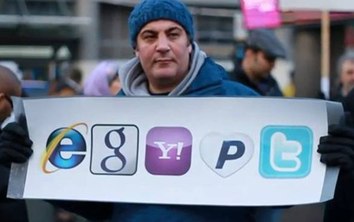
 Earlier this week, I talked about the
  Once upon a time, we used to watch TV by appointment. Families gathered together around a tiny screens – screens that were even smaller than our current laptop screens – and share the experience of watching a program together. Even earlier than that, families used to sit around their radios and “watch” their favorite comedies, dramas and adventures.